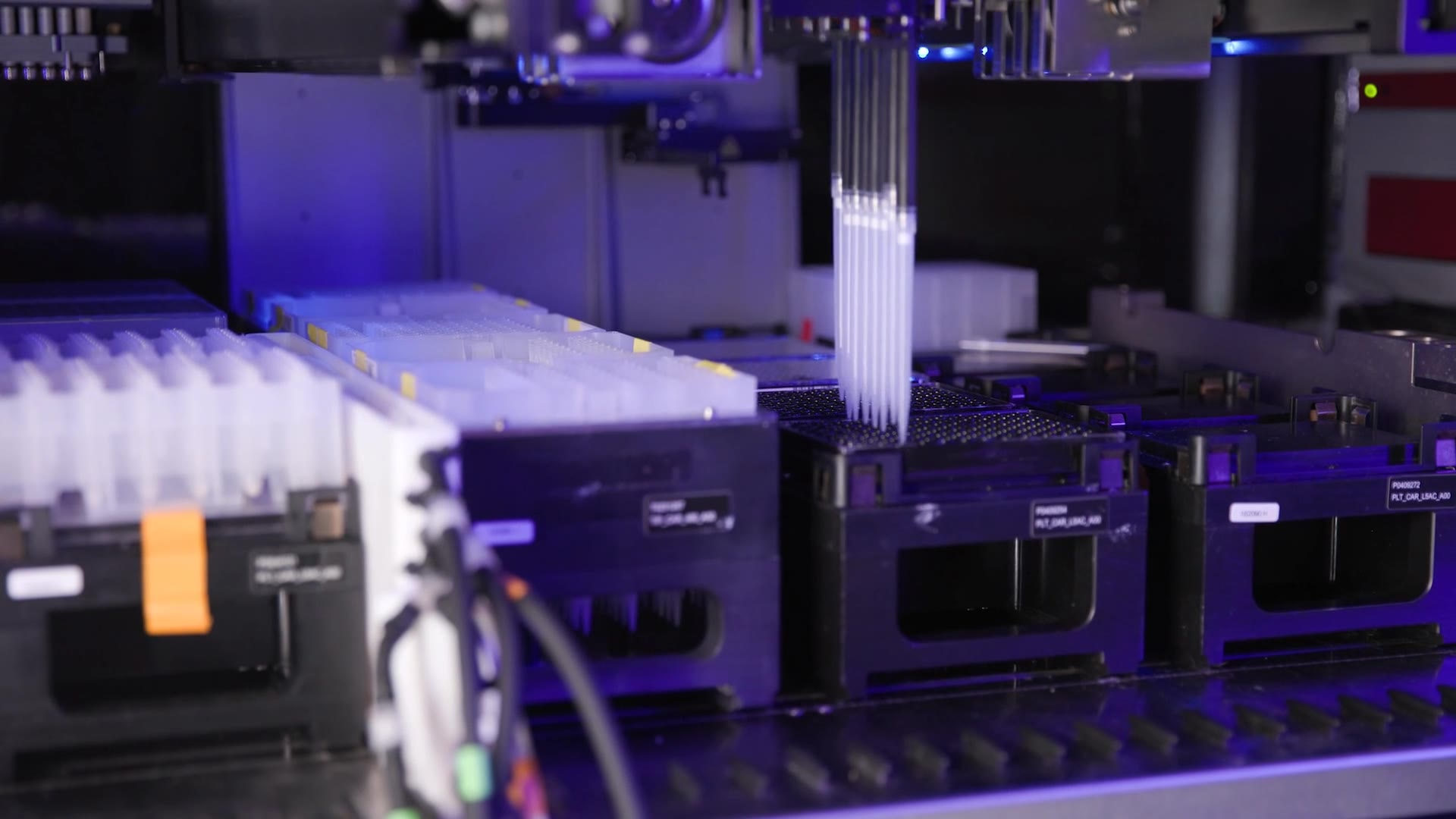
In the Chory Lab, we're dedicated to fostering a welcoming, collaborative, and intellectually stimulating environment that constantly pushes the boundaries of scientific discovery.
This page describes what that looks like day to day, from the values we hold each other to and how we do science together to how we support each other along the way. The full policies are in our public lab handbook.
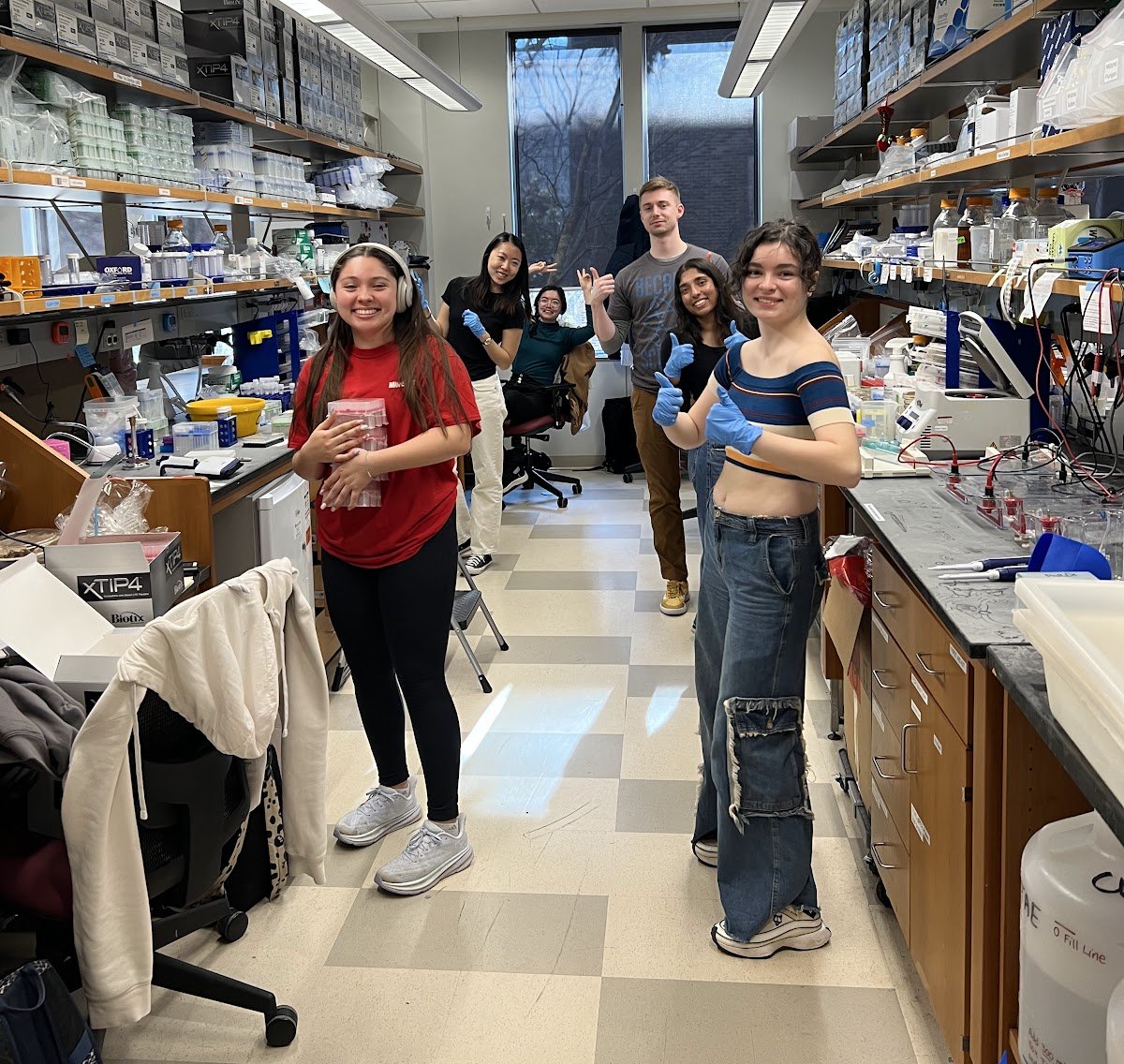
Core values.
These values are not just ideals. They are practical guides that shape our daily work and interactions.
Curiosity
Driven by the desire to explore the unknown, we're excited about new and formidable challenges.
Collaboration and open science
We work together, share ideas, and open-source our work, because we can achieve more together than we could individually.
Growth mindset
Our abilities develop through dedication, effort, and learning from both successes and failures.
Life-long learning
We embrace the joy of being wrong. We question our own priors and are willing to change our minds.
Perspective and mutual respect
A range of viewpoints makes for better science, and everyone here is treated with respect.
Communication and transparency
We share updates and discuss challenges openly to build trust and effective collaboration.
Integrity and ethical conduct
We conduct research with honesty, transparency, and responsibility in all our work.
Balance and well-being
Experiments will fail, and science can be hard. Taking care of ourselves is how we stay passionate through it.
Mentorship and support
Our lab members' success is our success. We help each other when it is needed and celebrate when it is earned.
Continuous evolution
We keep refining our methods, ourselves, and our lab, and we seek and give feedback proactively.
Lab expectations.
Everyone has their own working style and personal commitments, so our expectations are built for flexibility, teamwork, and professionalism rather than rigid rules.
- Flexible schedules. We don't enforce strict hours, but we expect everyone to be present and engaged, because learning happens fastest at the bench and in conversation with lab mates.
- Shared responsibility. We are all in this together, so the work of running the lab is shared. Everyone, including Emma, rotates weekly through TaskMaster, the jobs that keep the lab running. It keeps that work visible and evenly distributed, and everyone learns how the lab works.
- Showing up for each other. We come to lab meeting prepared, give feedback freely, and treat training a lab mate as part of the job.
- Be kind. We treat each other with grace and respect. Everyone makes mistakes, and we would rather help each other learn from them than dwell on them.
- Safety and shared spaces. Safety comes first. The lab is a shared space, so everyone helps keep it clean and organized, and we try to leave benches, equipment, and common areas better than we found them.
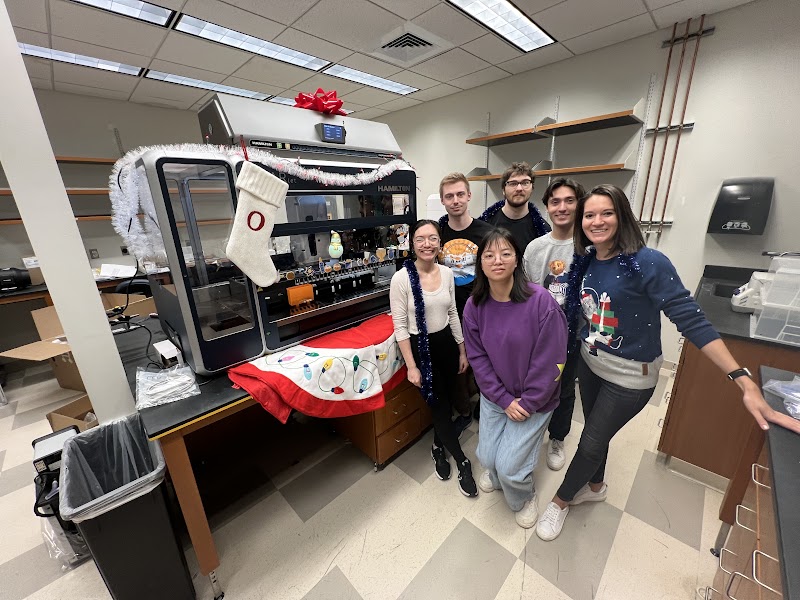
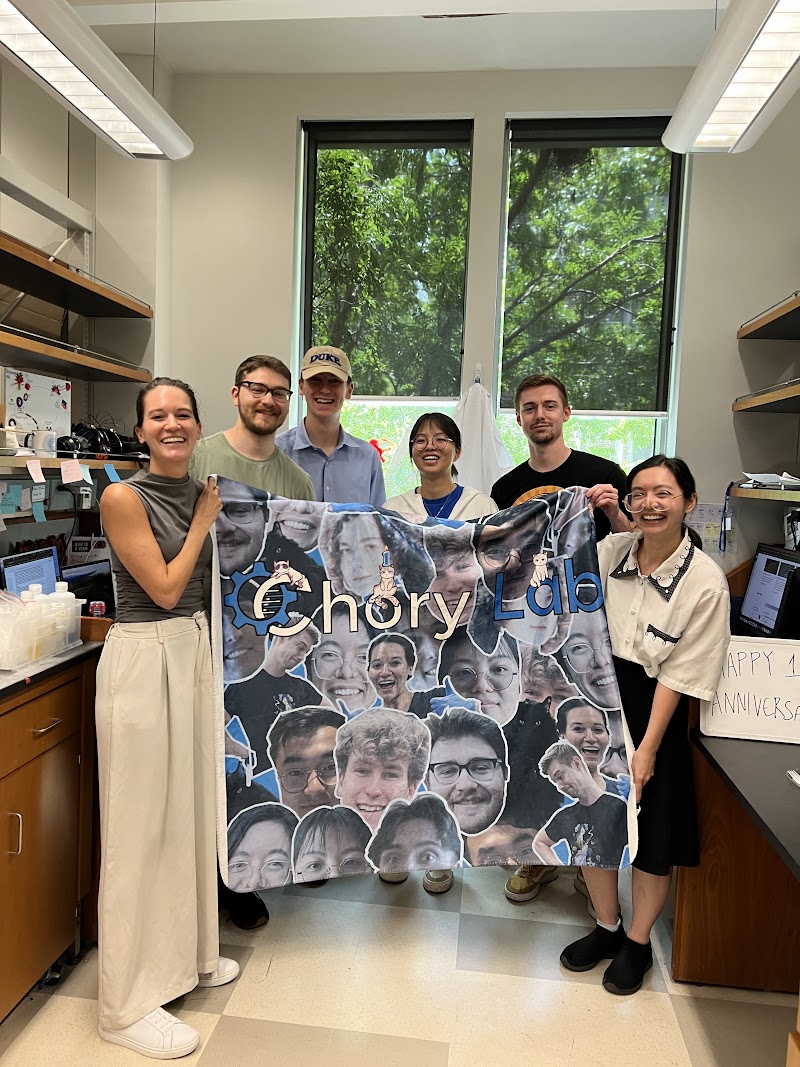
Scientific expectations.
We hold ourselves to rigorous, reproducible science, and we are honest with each other about what is and is not working.
- Rigor and reproducibility. We design experiments carefully, run the right controls, and document our methods and data clearly enough that anyone in the lab could reproduce the result.
- Collaborative, with ownership. We are a highly collaborative lab, but each person owns their project. That ownership is what sustains enthusiasm when the science gets hard, and over time it makes you the leading expert on your research area.
- Momentum. We analyze experiments promptly, ideally within the week they are run, so each result can shape the next experiment.
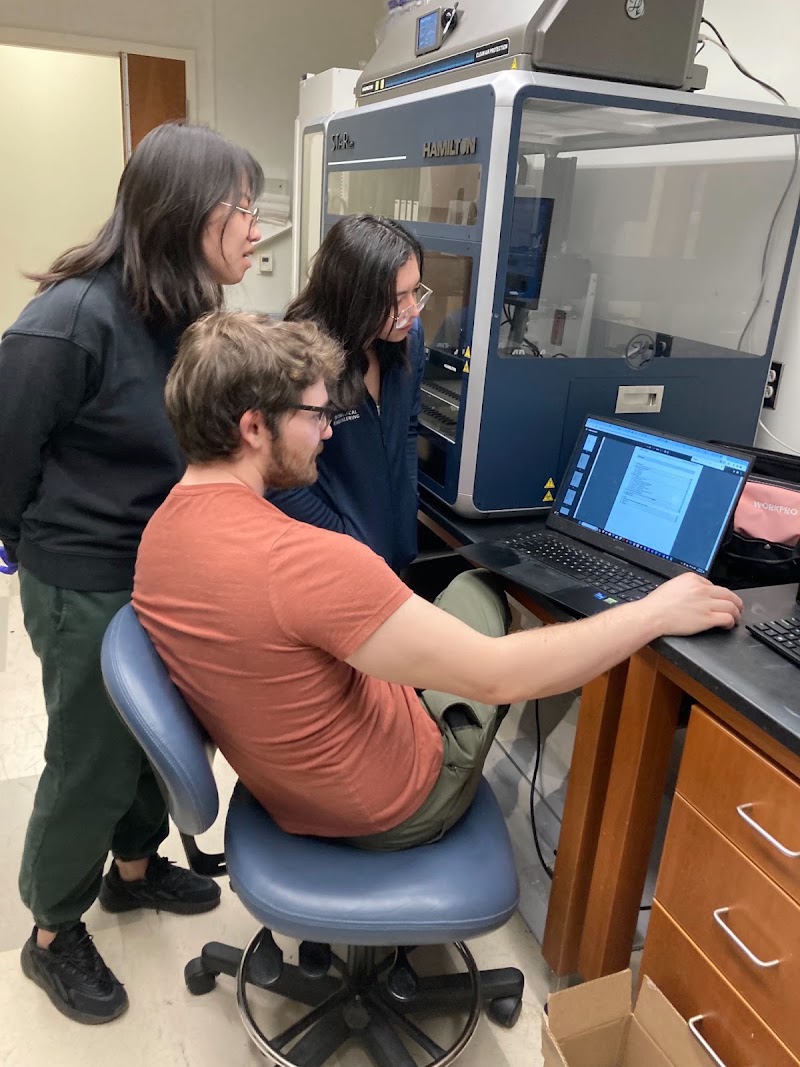
- Resourcefulness. We track down the equipment, reagents, and software a project needs, and we ask the lab when we get stuck.
- Progress reports. Every six months, everyone in the lab, undergraduates included, writes a short progress report and goes through it with Emma. It is not a test or a competition. It is about self-reflection, progress mapping, and strategic planning.
- Reading the literature. We stay current with our field and share new papers with each other as we find them.
- Open science. We post preprints on bioRxiv and release our hardware and software openly so other labs can use them.
- No bad questions. Asking questions is way more important than simply having the right answers.
Communication.
We believe that building a strong foundation of open, effective communication is essential to a successful and well-functioning research environment.
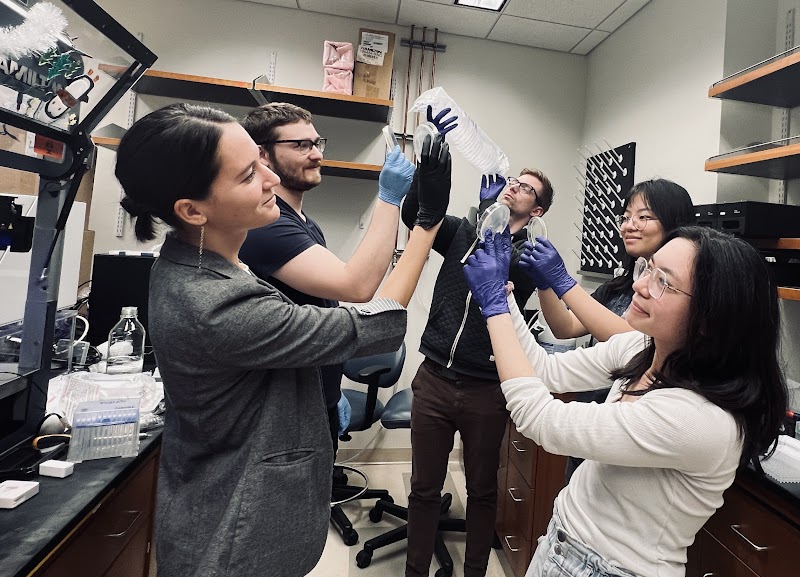
- Weekly lab meeting. The whole lab meets every week. It is a safe space for honest feedback, and we bring the experiments that failed along with the ones that worked, because problem-solving is the whole point of training to be a scientist.
- Subgroup. Our lab bays take turns in subgroup, a smaller and more informal meeting where people bring whatever they have worked on since their last turn, from raw data to plans for next steps.
- Supergroup. We meet regularly with two of our scientific neighbors, rotating presenters across all three labs. It is how we get to know our neighboring labs and their science well, and it brings fresh perspectives to our own work.
- One-on-ones and paper planning. Everyone has regular one-on-one meetings with Emma, and each manuscript gets its own paper planning meetings where we work out the story and the figures together.
- An open door. If Emma's calendar says she is not in a meeting, you can walk in, and anyone can block extra time with her whenever they need it.
- Feedback is a skill. Giving and receiving feedback on science, presentations, and the lab itself takes practice, and the lab is a good place to practice it with care.
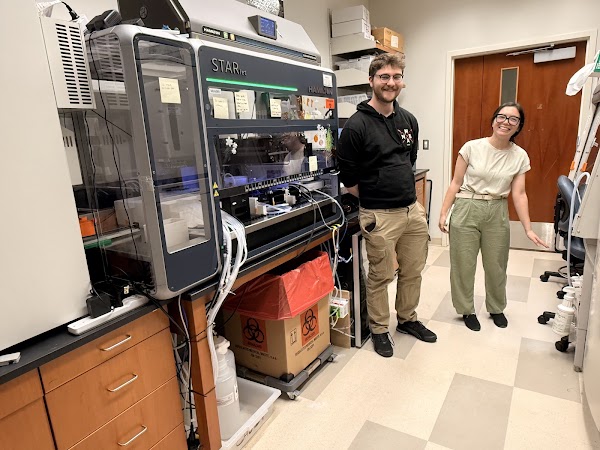
- Heads-ups and help. We let each other know when equipment breaks or a shared reagent runs low, reserve shared equipment ahead of time, and post on Slack when we need a hand, like pulling plates from the incubator.
- Saying when it's hard. Sharing that you are having a hard week, to whatever degree you are comfortable, helps your lab mates understand and prevents misunderstandings later.
- Slack. We are a Slack-heavy lab, and Slack is our main way of communicating, from quick questions and experiment updates to logistics. We also love our custom Slack-mojis, and :science_parrot: shows up for every win, big or small.
Well-being and balance.
We believe that well-being is essential for a successful research career and for the life beyond it.
- We work hard because we love it. We are a hard-working group. We love science and we are challenged by it, and that is what motivates the time we spend in the lab.
- Time off. We encourage everyone to take time off when they need it, whether that is a vacation or a mental health day. Nothing is worse for science, or for the people doing it, than burnout.
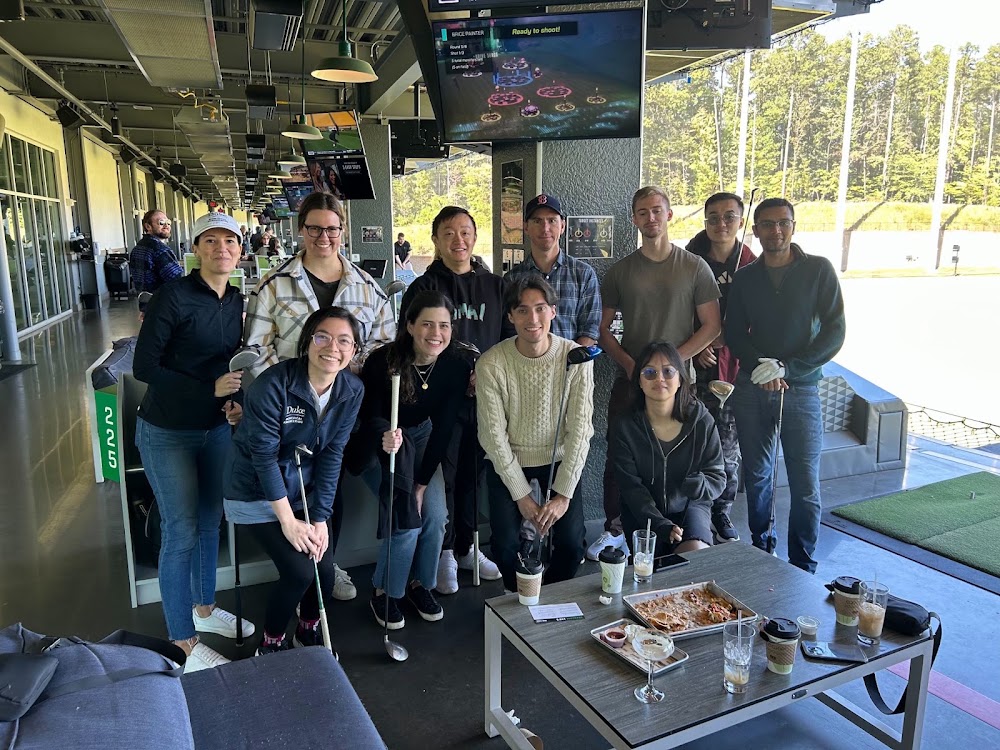
- Life outside the lab. Hobbies, exercise, friends, and family make for better science, and we encourage everyone to protect time for them.
- Lean on others. If you are struggling, reach out to lab mates, friends, family, or Duke's professional resources. Seeking help shows strength and resilience.
Mentoring.
We encourage building mentorship skills as part of training. Becoming a good mentor is part of eternal learning, and mentors and mentees both make mistakes and get better at it together. We take mentorship seriously, so students take on mentees only when they are ready and eager to.
- Guidance goes both ways. Seek advice from more experienced lab members, and offer your own expertise to newer ones as they find their way through their projects.
- Mentoring students. Undergraduates and Masters students work closely with a PhD student or postdoc. Mentors plan projects carefully, teach skills gradually, and give their mentees more independence as they gain proficiency.
- Regular check-ins. Mentors and mentees meet regularly to talk through progress, challenges, and goals.
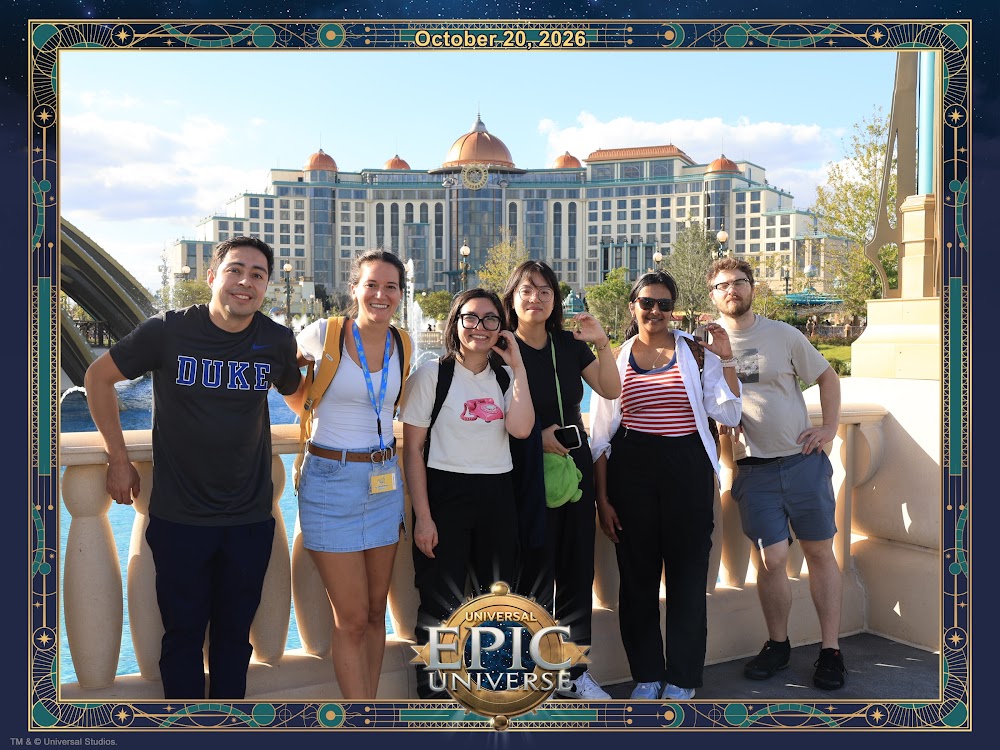
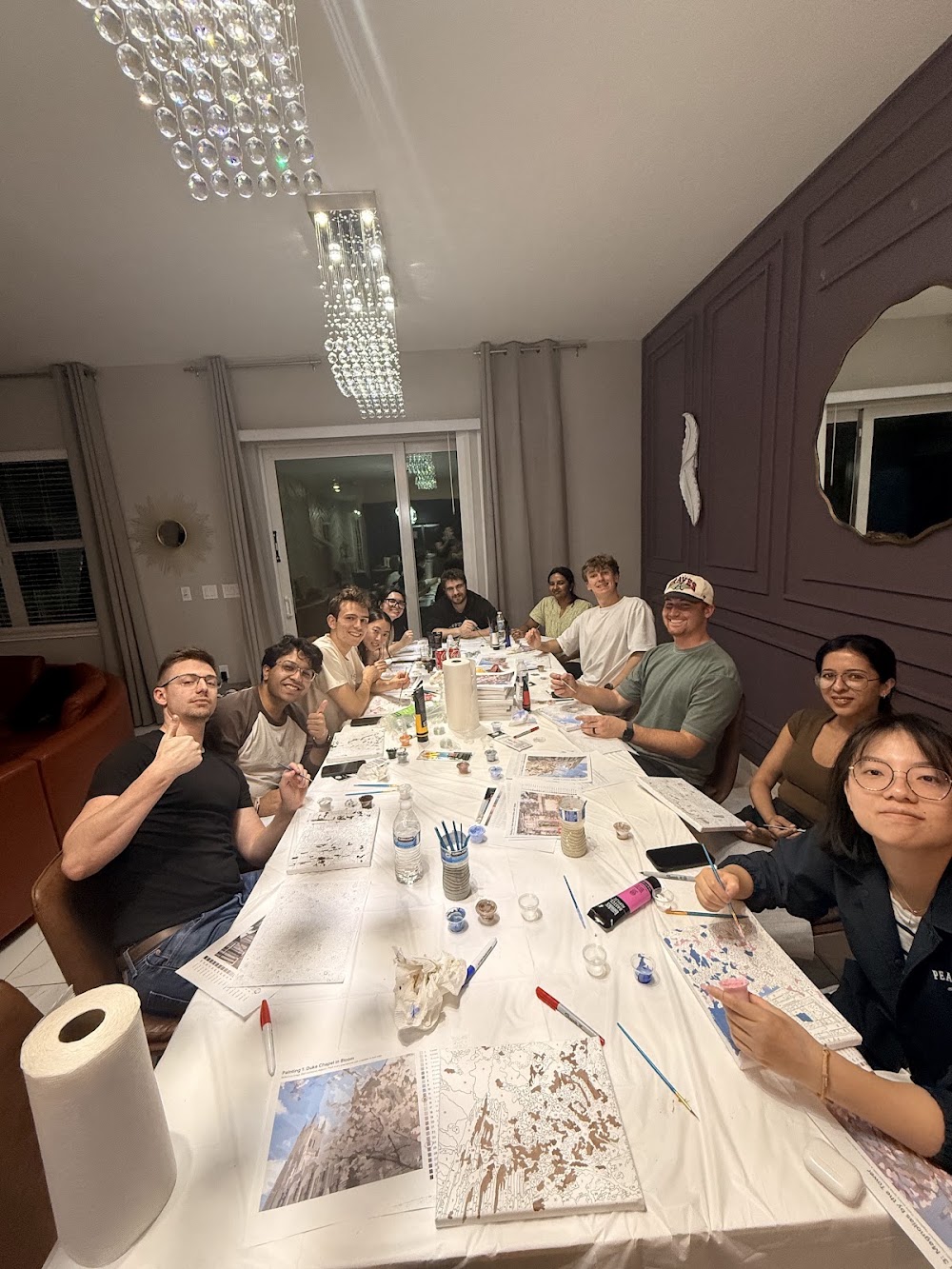
- A continuously evolving lab. Like the proteins we evolve, the lab keeps improving through feedback. Each year everyone fills out an anonymous feedback form. In 2026 we held our first lab retreat, with a day on how we organize our work, a day together at Universal, and a day on lab culture where we proposed changes to the handbook, mapped out the figures for every active paper, and pitched new project ideas Shark Tank style.
Community.
Everyone here is entitled to the same respect and the same opportunities, and we try to give back to the Duke and Durham communities around us.
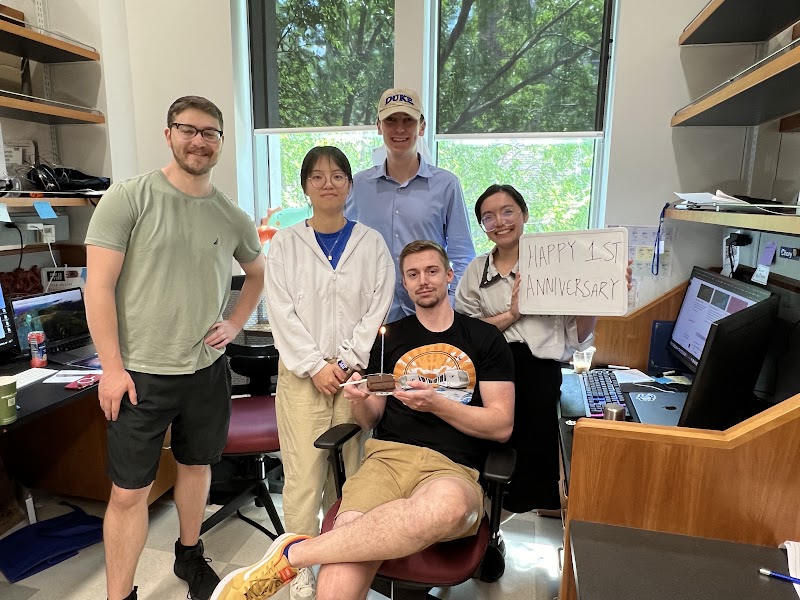
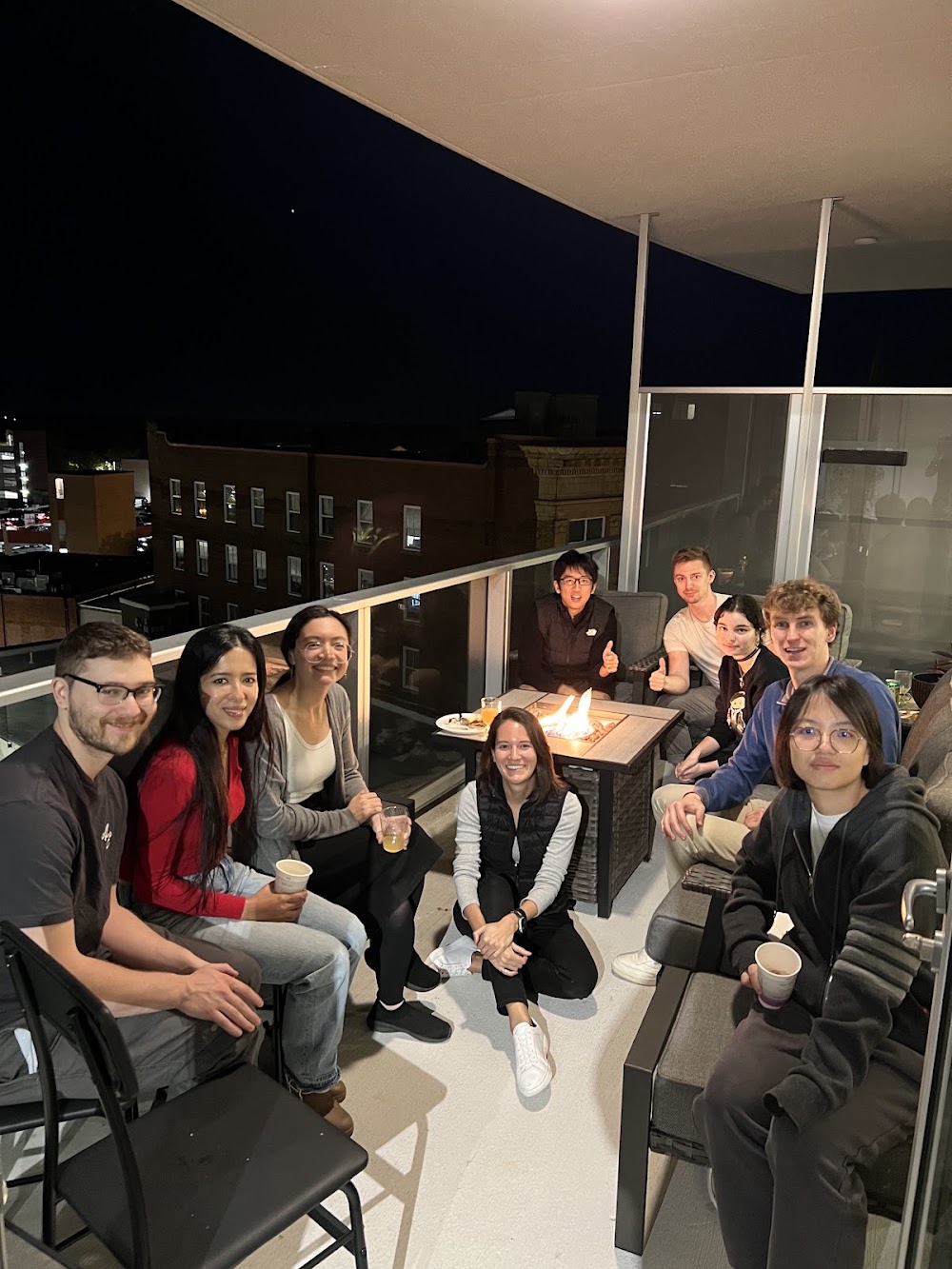
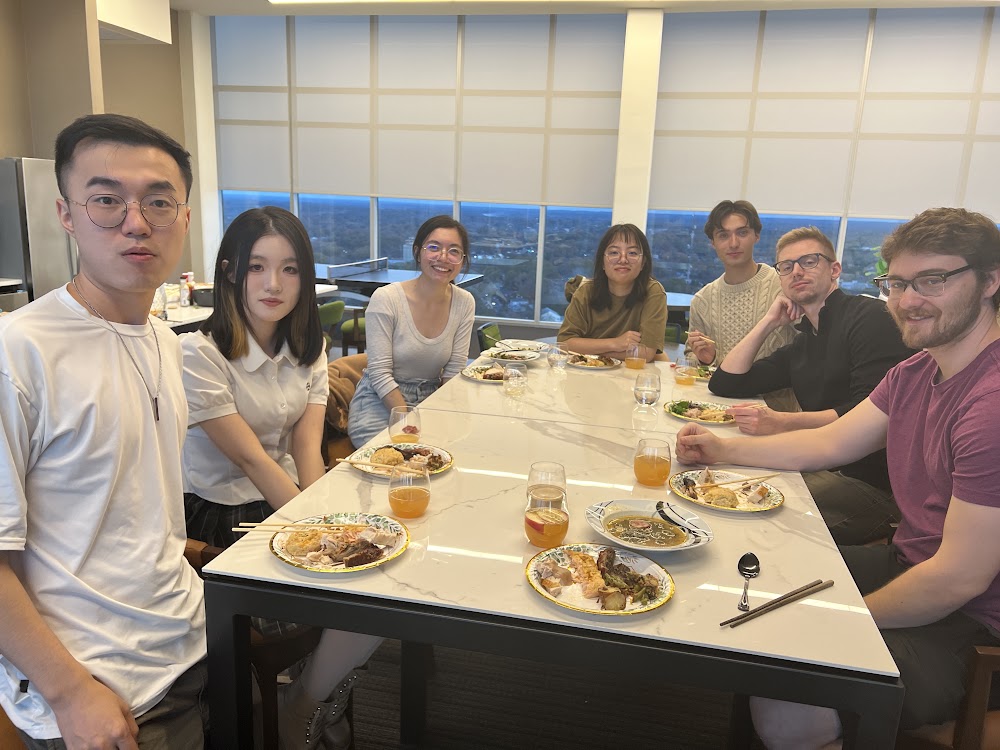
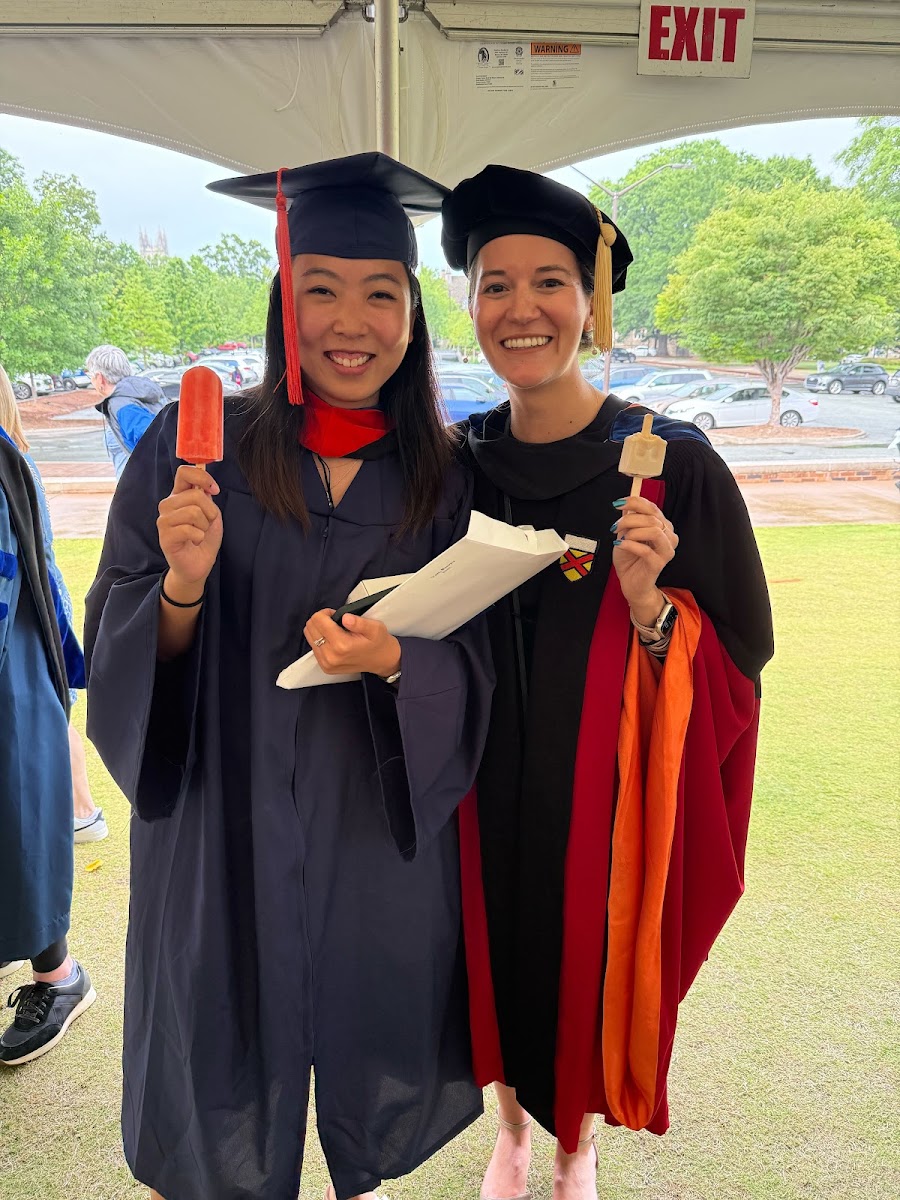
- Recognizing milestones. Passed prelims, fellowships, papers, and graduations get celebrated as a lab, and we mark it when someone moves on to their next step.
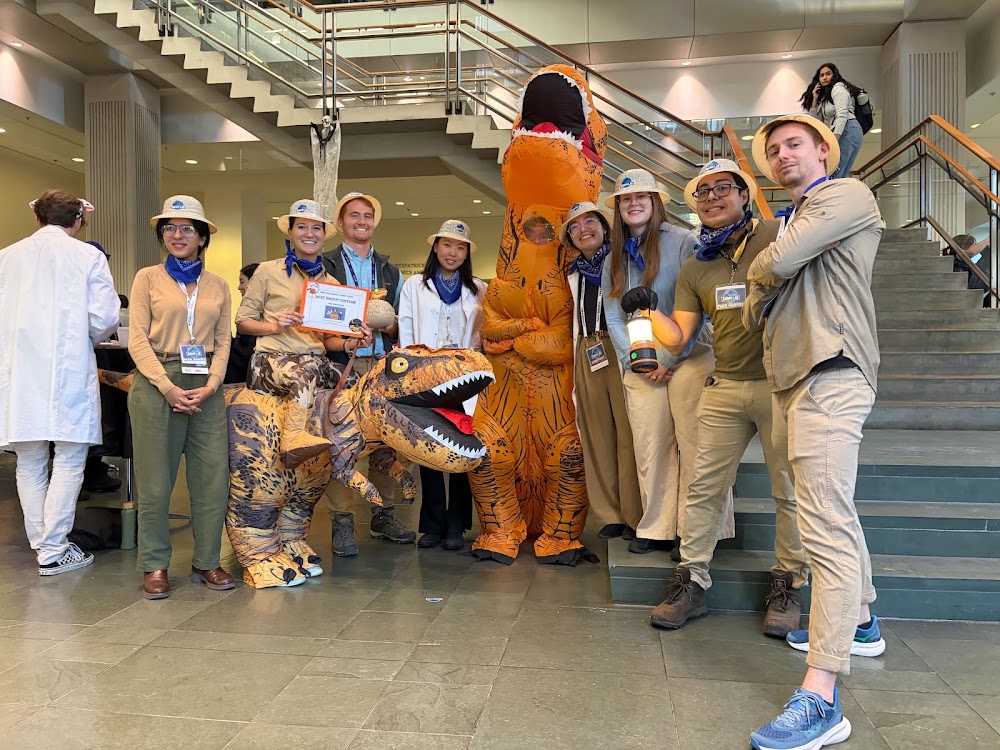
- Outreach. We look for ways to bring K-12 students in Durham into research, including through the BME department's summer program for high school students.
- Zero tolerance for harassment. This applies inside and outside the lab, and every member is expected to interrupt and intervene when inappropriate behavior occurs.
Hard conversations.
Conflicts can arise for all kinds of reasons, and we are committed to addressing them proactively and constructively.
- Conflict. We are all human and can make mistakes, Emma included. We address conflicts early and openly, and Emma is always available to help, especially with external collaborators or where there is a power imbalance.
- Support beyond the lab. Academic advisors, thesis committees, and the Duke Ombuds Office all offer confidential guidance and additional perspectives.
- Changing course. Not everyone takes the same path through their time in the lab, and that is okay and expected. Deciding that a different path than you originally planned better fits your life or goals is not a failure. It's a testament to your self-awareness and courage, and our goal is to help you navigate these decisions.
Want the details?
Our lab handbook is public. It covers everything on this page in more depth, along with authorship, safety, travel, and our favorite things to do in Durham.