Resources
Open hardware and software for high-throughput biology. Free to use, contributions welcome.
Open hardware and software for high-throughput biology. Free to use, contributions welcome.
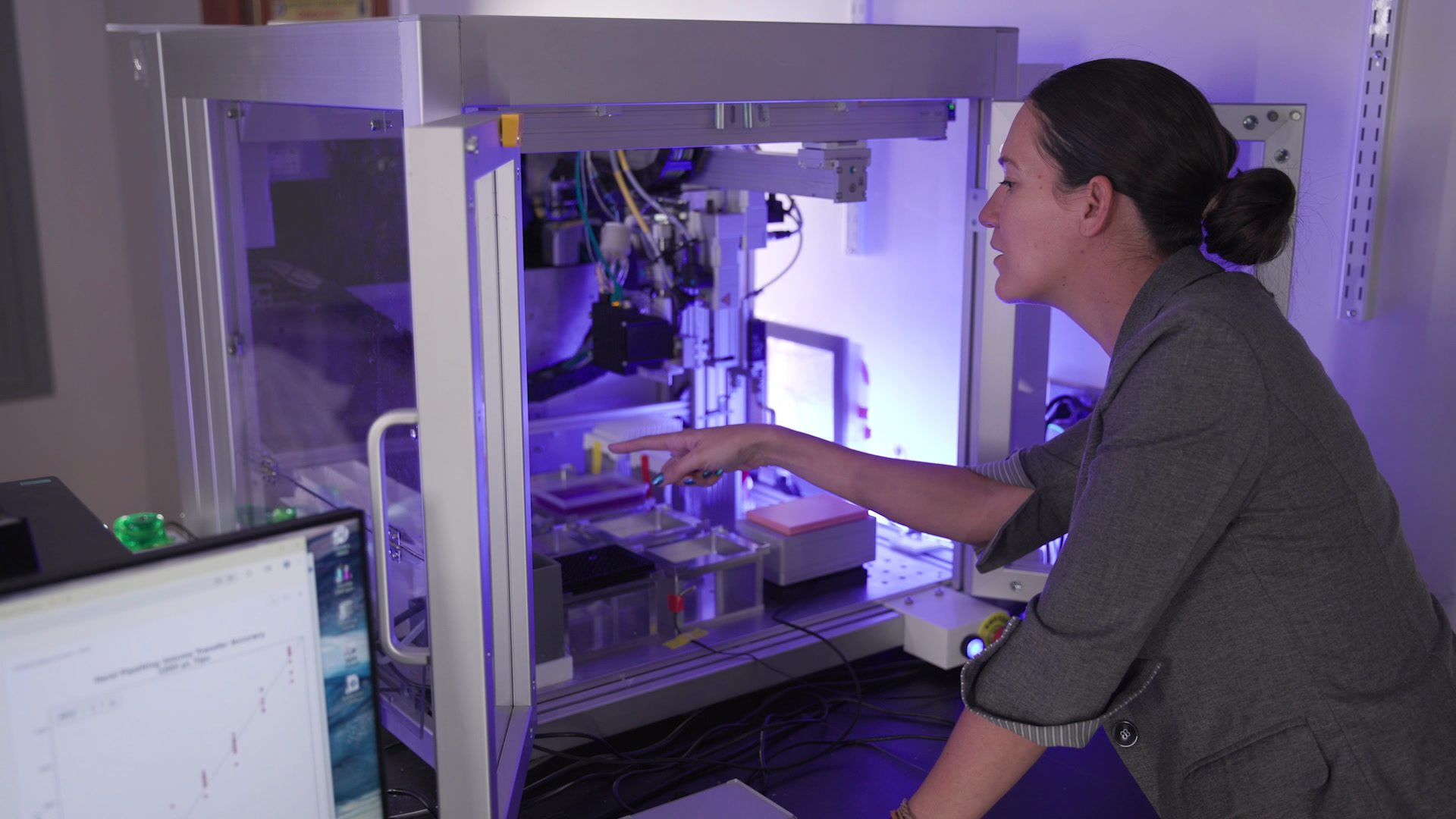
Commercial liquid handlers cost more than most labs can justify, which puts high-throughput biology out of reach. We are building a low-cost, fully documented instrument that runs the same protocol code as commercial machines through PyLabRobot.
Supported by the Alfred P. Sloan Foundation, a collaboration with the Festo Corporation
Two community projects underpin most of our automation work. We did not create PyLabRobot. We use it daily, contribute to it, and want to help it spread. If either tool supports your work, please cite the paper.
A hardware- and operating-system-agnostic Python SDK for automated laboratories. Write a protocol once and run it across liquid handlers from different manufacturers.
A community-built project. We use it daily and contribute to it, and members of our lab are among its contributors.
Our work on PyLabRobot is supported by NIH NIBIB
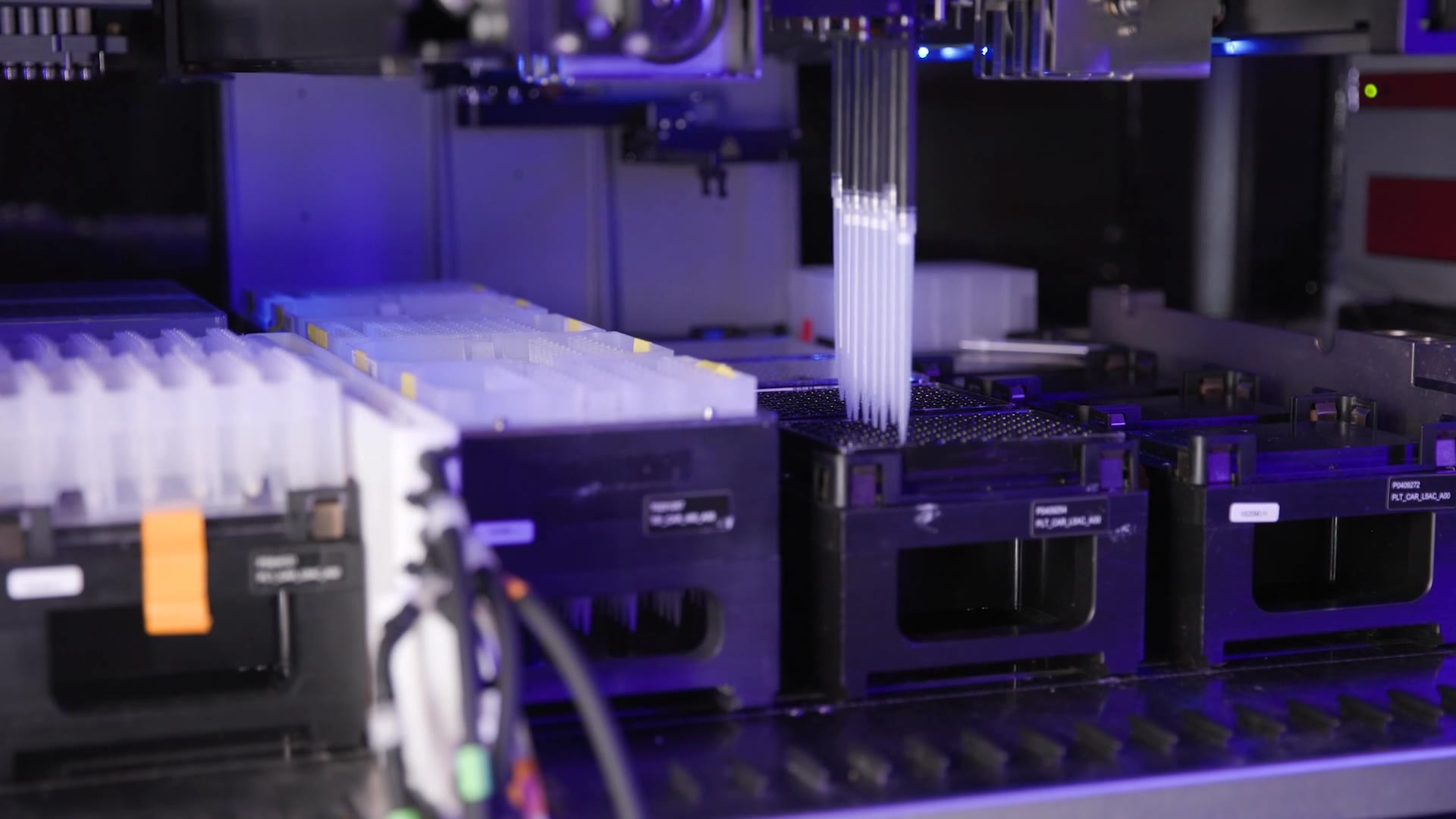
Python control for Hamilton STAR, STARlet, and VANTAGE liquid handlers, bringing version control, exception handling, and object-oriented design to robotic method development. The foundation for PRANCE.
Originally developed in the Esvelt lab at MIT with contributions from our lab, which continues to develop it here.
Chory lab members shown in bold.
Tools written in the lab, published from our GitHub organization.
Control code for our plate transfer station.
PyLabRobot support for our open-source liquid handler, so the low-cost hardware runs the same protocol code as commercial instruments.
Turbidostat control through PyLabRobot. Holds many cultures at constant density in parallel, the growth control behind TurboPRANCE.
Code and plate mapping for automated transfer of the Keio Collection, the single-gene knockout library of E. coli.
Interested in learning PyLabRobot? Our PLR bootcamps are open for anyone to use and learn from.
BME 590 Fall 2026 Laboratory Automation: course repo and PyLabRobot cookbook.
Course materials for BME 590, our lab automation class at Duke Biomedical Engineering.
Hands-on PyLabRobot tutorials written for our BME 590 course. Setup instructions, class exercises, and Hamilton examples.
Lab Automation Education exercises: notebook problems, survey data, and datasets from a pilot course in teaching lab automation.
A project of Prof. Cameron Kim (Duke BME), whose BEETL lab develops it. We host a mirror and contribute to it.
All of our public code lives in one place. Issues and pull requests are welcome. Our repositories are released under the MIT license unless noted otherwise.
Visit our GitHub