Read this page first, then sign the expectations agreement at the bottom. Bring questions to your mentor or to Dr. Chory at any point.
Before proceeding, first read the Department's BME Independent Study Expectations Document
Philosophy
Independent study is a unique opportunity to focus on learning the scientific method, working towards research independence, and to tackle a project that matters. Importantly, the goal is training, not guaranteed scientific outcomes. Experiments may fail, directions may change, and uncertainty is expected. Unlike informal lab experiences, independent study is treated as an academic course with defined expectations. As a result, over the course of the semester your grade will reflect effort, engagement, rigor, and professionalism, not whether experiments "worked". We think about a full academic load like having a full-time job. A typical semester with four courses corresponds to roughly 40 hours per week of academic effort, or about 10-12 hours per week per course. As such, we just treat independent study in the same model, to give you a sense of what you should expect for timing and expectations. Students should never miss classes for lab meetings or experiments, but are expected to responsibly plan their research schedules accordingly around their courses. If conflicts come up, please communicate in advance and we will do our best to plan around them together.
Time Commitment & Expectations
Asking Questions and Getting Support:
Questions are always welcome and never seen as annoying, more like the contrary! Independent study is a learning experience, and asking for help is an expected and important part of research. Asking questions demonstrates curiosity 100x more than head nodding signals competence.
How Much Time
- Expected weekly hours: Independent study should be treated like a standard course in your semester schedule. As a rough guideline, a full-time academic load is about 40 hours per week of total coursework and related effort. If you are taking four courses, that works out to about 10 hours per week per course. Independent study should fit within that same framework, including time spent in the lab, analyzing data, reading, writing, and planning next steps. In practice, this corresponds to about 10 to 12 hours physically in the lab each week for a standard independent study, with some additional work potentially happening outside the lab. These time expectations are meant to set a baseline, not a limit. If you are especially excited about your project and want to spend more time in the lab, that is great, but students are not expected to go beyond the standard commitment in order to do well.
- Independent study counts as one of your classes: Lab work should essentially occupy one of your normal course slots rather than stack on top of a full schedule. We approve independent study as an overload only in rare cases, usually for students who have already spent enough time in the lab to know their own work style and pace. Even then we strongly advise against it, because the expectations in a lab generally do not fit into a semester that is already full. If you are considering an overload, talk with Dr. Chory before you register.
- In lab vs. out of lab work: While some work may occur outside the lab, students are expected to treat independent study as an in-lab research experience, and work associated with the project should primarily be carried out in the lab whenever feasible. This is also the best way to get feedback and interact with lab members.
How to spread it across the week
- Distributing hours across the week: How you spread your hours matters as much as the total. A common pattern is 2 to 3 hours a day across 5 days. If you plan carefully with your mentor, 3 to 4 hours a day across fewer days can also work.
- Experiment planning often follows a biological clock: Research schedules are often set by the biology, not by when you happen to be free. Mammalian cell work might mean growing cells one day, splitting them the next, and processing them the day after. Bacterial work and cloning are the same, just on a different rhythm.
- Science is rarely a one-day task: Most work is a chain of steps where each one sets up the next, so progress accumulates through short, regular attention across the week.
Planning your experiments
- Plan experiments before you start: It will help to map out every day of a planned experiment and confirm you are available for all of them. Starting something on Monday and planning to return to it the following Monday does not work, because the cells will not wait.
- Build in a buffer: Things run long, reagents run out, and instruments break. Always assume more time than you expect.
- Do not start what you cannot finish before class: Misjudging this early is normal, since learning how long a protocol actually takes is part of the training. Once you know your own timing, you are expected to schedule around it rather than starting a three-hour experiment two hours before a class.
See some examples below for
What does "Independent" mean?
Expectations for independence vary depending on a student's experience level, stage of training, and the specific project. In general, independence means being able to carry out routine experimental work without requiring a mentor to oversee experiments or do work on the student's behalf. Independence is expected to develop over the course of the semester as skills, familiarity with the project, and confidence increase. Independence may take different forms depending on the nature of the project. In some cases, this means coming into the lab for longer, uninterrupted blocks of time to run experiments. In other cases, it may involve brief visits to the lab to check cultures, collect samples, or perform short tasks. Students are expected to plan their time accordingly and take responsibility for coordinating their work. At the same time, the lab operates as a shared environment, and repeatedly asking lab members to step in for routine or logistical tasks places a burden on others' time. For this reason, expectations around independence, availability of support, and appropriate requests for help should be discussed clearly with the primary mentor at the start of the semester. Students are encouraged to ask questions and seek guidance, but are also expected to take ownership of their work and plan accordingly.
How this develops over the semester
- Shadowing is the starting point, not the goal: Early on you will watch, get trained hands-on, and run things alongside your mentor. Everyone begins this way, and no one is thrown in on day one. Over the semester the balance shifts toward you running experiments yourself.
- Leaning on your mentor early is expected: The first few weeks are training, and relying heavily on your mentor then is normal. Over the semester you take on more of the day-to-day execution yourself. Ask your mentor where you should be on that curve.
Working with your mentor
- Asking for help is always welcome: Labs greatly benefit from people supporting each other, and asking questions is part of how you learn. None of the expectations below are meant to discourage asking.
- Mentoring is a time-commitment on its own: Every PhD student and Postdoc in the lab is carrying their own project load, working towards their career and research goals, and is volunteering time to mentor students on top of a full-time job as a PhD student or postdoc. Keep this in mind as you work together and plan together throughout the semester.
- Plan the timeline together before you start: Walk through the days an experiment will require with your mentor and confirm you can cover each one. If something comes up, say so early.
- Finishing your own experiments is part of the learning: The middle days are where most of the troubleshooting skill comes from, so you learn more from seeing an experiment through start to finish than from the result itself.
How this shows up in the grade
Failed experiments have no impact on your grade. Missing days you committed to, or showing up without a plan for the day, does. Both the time commitment and independence portions of the Chory Lab Independent Study Final Rubric cover planning and follow-through.
Meetings and Check-Ins
Each independent study student is paired with a primary peer mentor in the lab (graduate student, postdoc, etc) and part of independent study includes recurring meetings and check-ins over the semester to get feedback.
Check-ins with your peer mentor
- Students are expected to have at least one check-in per week with their peer mentor.
- 1:1 format is flexible (bench-side, coffee, lunch, formal meeting, whichever suits you).
- Purpose is progress tracking, troubleshooting, and integration into the lab.
- Peer mentors will be asked to provide brief mid and end-of-semester feedback that touch on what was covered in the 1:1s, and as part of the mid-semester check-in (see below)
Sub-group updates
The lab holds weekly subgroup meetings throughout the semester. We try to coordinate subgroup schedules so that meeting times minimize overlap with coursework whenever possible. Students enrolled in independent study are expected to participate in subgroup and to give structured progress updates on a regular cadence. Specifically, each student should coordinate with their mentor to select 1-2 subgroup meetings during the semester to give ~10-minute research update. These updates should be prepared in advance and are intended to receive support and feedback from the lab. Subgroup presentations are intended to support:
- Clear communication of ongoing work and reasoning
- Feedback on experimental design, interpretation, and next steps
- Discussion of experimental challenges and troubleshooting strategies
Students are encouraged to present data in a clear and interpretable form, including negative or inconclusive results. Sharing negative data is strongly encouraged, particularly when it informs troubleshooting or future experimental plans. Subgroup presentation scheduling is coordinated to accommodate course commitments. Students should complete the course schedule form at the start of the semester to assist with planning:Weekly Availability Form
* As the lab grows, coordinating meeting times that work for all members becomes increasingly challenging. Coursework always takes priority, and students are never expected to miss classes to attend lab or supergroup meetings. We will make a good-faith effort to schedule subgroup meetings around as many student course schedules as possible.
Mid-Semester Check-In
Every independent study student completes a mid-semester check-in with their peer mentor. The check-in has three steps, and the student is responsible for scheduling all of them.
- Meet 1:1 with your mentor. Discuss how the semester is going, including what is going well, what is not going well, and any challenges, training needs, or areas where additional support would help.
- Fill out Chory Lab Independent Study Mid-Semester Check-In before or during that meeting, then review it with your mentor.
- Meet with Dr. Chory, together with your mentor. All three of you meet to review progress and feedback and agree on next steps for the rest of the semester. Use Dr. Chory's Calendly Link to schedule meeting time.
The form and the discussion are meant to support reflection on progress, alignment, training, documentation, and skill development, rather than to evaluate experimental outcomes alone. The goal is to identify a small number of concrete action items to guide the rest of the semester.
Required Components
Lab Notebook and Documentation: Students are expected to…
- Maintain a clear, dated lab notebook (benchling or paper).
- Record experimental plans, observations, results, and interpretations.
- Document failed experiments and troubleshooting steps.
- Keep notebooks and metadata updated in a way that another lab member could follow.
Engagement and Professional Conduct: Students are expected to…
- Communicate clearly and proactively.
- Attend lab meetings when possible*
- Notify the lab in advance if classes or academic obligations conflict.
- Follow lab safety, data integrity, and professionalism standards.
Final Deliverable
Students will submit a final product, scaled to credit load and experience level. The emphasis is clarity, reflection, and scientific reasoning. Examples of deliverables include:
- A written report summarizing goals, background, methods, results, and lessons learned.
- A well-organized dataset with documentation.
- A presentation to the lab in a formal lab meeting (i.e. not sub-group).
This document, check-ins, and rubric are also intended to referenced in future letters, including:
- Reliability and follow-through
- Independence and initiative
- Scientific reasoning and documentation
- Peer mentorship feedback Note: Peer mentor input may be incorporated into evaluations.
Grading Rubric
Grades are based on the following components.
| Category | Weight | What This Means |
| Time Commitment and Consistency | 20% | Meets minimum weekly in-lab time expectations, distributes time to match experimental timelines, and follows through on agreed responsibilities without requiring a mentor to complete the work |
| Lab Notebook and Documentation | 20% | Clear, complete, and timely records, including negative results and scientific reasoning |
| Engagement and Communication | 15% | Professional conduct, responsiveness, and communication, including advance notice of conflicts |
| Independence and Initiative | 15% | Appropriate ownership of work, initiative in planning or troubleshooting, and growth in autonomy |
| Mid-Semester Checkpoint | 15% | Prepared, reflective, and responsive to feedback |
| Final Deliverable | 15% | Clear synthesis of work, thoughtful analysis, and articulation of learning |
Explicitly not graded:
- Whether experiments succeeded
- Whether results were publishable
- Whether hypotheses were confirmed
The full final rubric is available here: Chory Lab Independent Study Final Rubric
Independent Study Forms
All students must complete the appropriate independent study registration form prior to the start of the semester. Students are strongly encouraged to review the completed form, including the abstract, with their primary mentor at least once before submitting it to Dr. Chory for review and signature.
- Master’s students should submit the graduate independent study form provided by the department via Kuali. The graduate independent study form is available here.
- The BME undergraduate independent study registration form is available here. For more questions, students should refer to the BME Undergraduate Program Handbook
- The undergraduate students in the College of Arts and Sciences should refer to Trinity Independent Study Guidelines.
What a week might look like
Below are some versions of what a normal week might look like, depending on your project. These are just examples and do not necessarily represent the true experiment times. *While weekend work is not required, twenty minutes on a Sunday night to start an overnight culture can save you three days during the week, so it is worth thinking about when you plan.
Cloning and Molecular Biology
| Day | Time (hours) | What you might do |
| Monday | 3 | Set up the assembly, transform, and plate. |
| Tuesday | 1.5 | Pull the plate in the morning, set up colony PCR, then pick colonies and start overnight cultures in the evening. |
| Wednesday | 3 | Miniprep, run a diagnostic digest, submit for sequencing. |
| Thursday | 1 | Check sequencing results, make glycerol stocks, update your notebook. |
| Friday | 3 | Retransform or plan to start experiment |
Mammalian cell culture
| Day | Time (hours) | What you might do |
| Monday | 2 | Split cells, count, and seed plates. |
| Tuesday | 3 | Transfect with DNA |
| Wednesday | 30 | Change media and check morphology. |
| Thursday | 3 | Harvest, lyse, or run your readout assay. |
| Friday | 1.5 | Split cells and set up next week's experiments. |
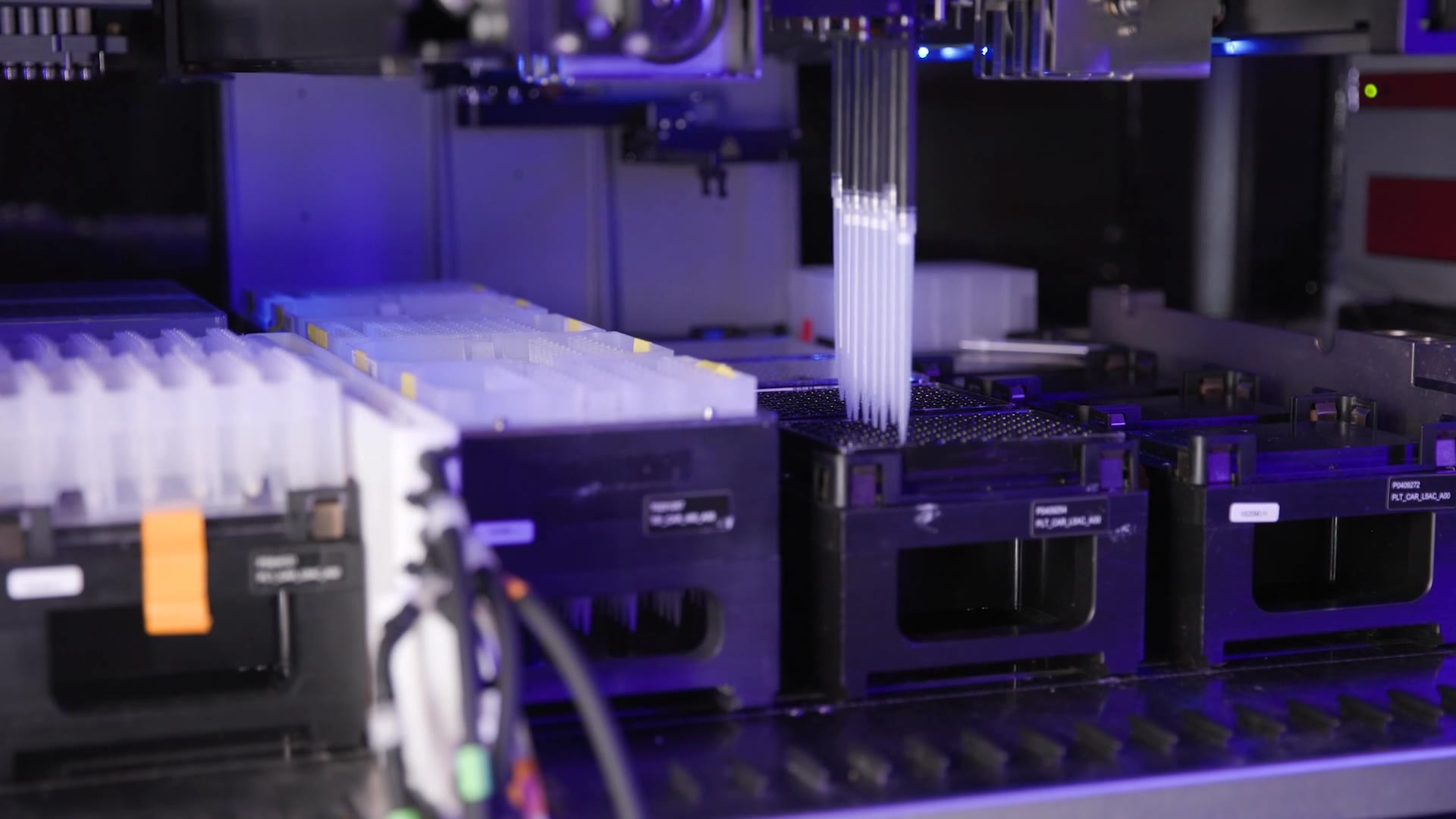
Automated runs on the robot
| Day | Time (hours) | What you might do |
| Monday | 1 | Streak plates and start overnight cultures for the run. |
| Tuesday | 2.5 | Dilute overnight cultures, set up a plate, set up robot, and start the run on the deck. |
| Wednesday | 30 | Check the robot, deck, and top off reagents. |
| Thursday | 2.5 | End the run, collect & process samples, and clean up the robot |
| Friday | 3 | Analyze the run data and plan the next one. |
Forms and resources
Register
- Graduate independent study form (Kuali)Master's students. File before the semester starts.
- BME undergraduate independent studyBME undergraduates. See also the BME Undergraduate Program Handbook.
- Trinity independent study guidelinesArts and Sciences undergraduates.
- BME graduate independent study form (PDF)The departmental form, for reference.
Before you start
- Independent study expectations agreementRead, tick the boxes, and sign. Takes about ten minutes.
- Weekly availability formFill this out in week one so subgroup is scheduled around your classes.
- Pratt Research Fellow agreementPratt Fellows sign this instead.
During the semester
- Mid-semester check-in formComplete with your peer mentor, then review it with Dr. Chory.
- Final grading rubricThe rubric your final grade is scored against.
- Lab handbookHow the lab works day to day.
Once you have read the above, sign the expectations agreement before your first week in the lab.
Sign the expectations agreement